
Exploring the nuances of Open Adoption vs Closed Adoption Pros Cons and Legalities sheds light on the complexities and considerations involved in the adoption process. From the impact on birth parents to the legalities surrounding adoption, this topic delves into various aspects that shape the adoption landscape.
As we navigate through the details of open and closed adoptions, we uncover the benefits, challenges, and legal implications that play a significant role in shaping the lives of birth parents, adoptive parents, and adoptees.
Open Adoption
Open adoption is a form of adoption where the biological parents and adoptive parents have some form of contact and communication with each other. This can range from exchanging letters and photos to having in-person visits.Benefits of Open Adoption for Birth Parents
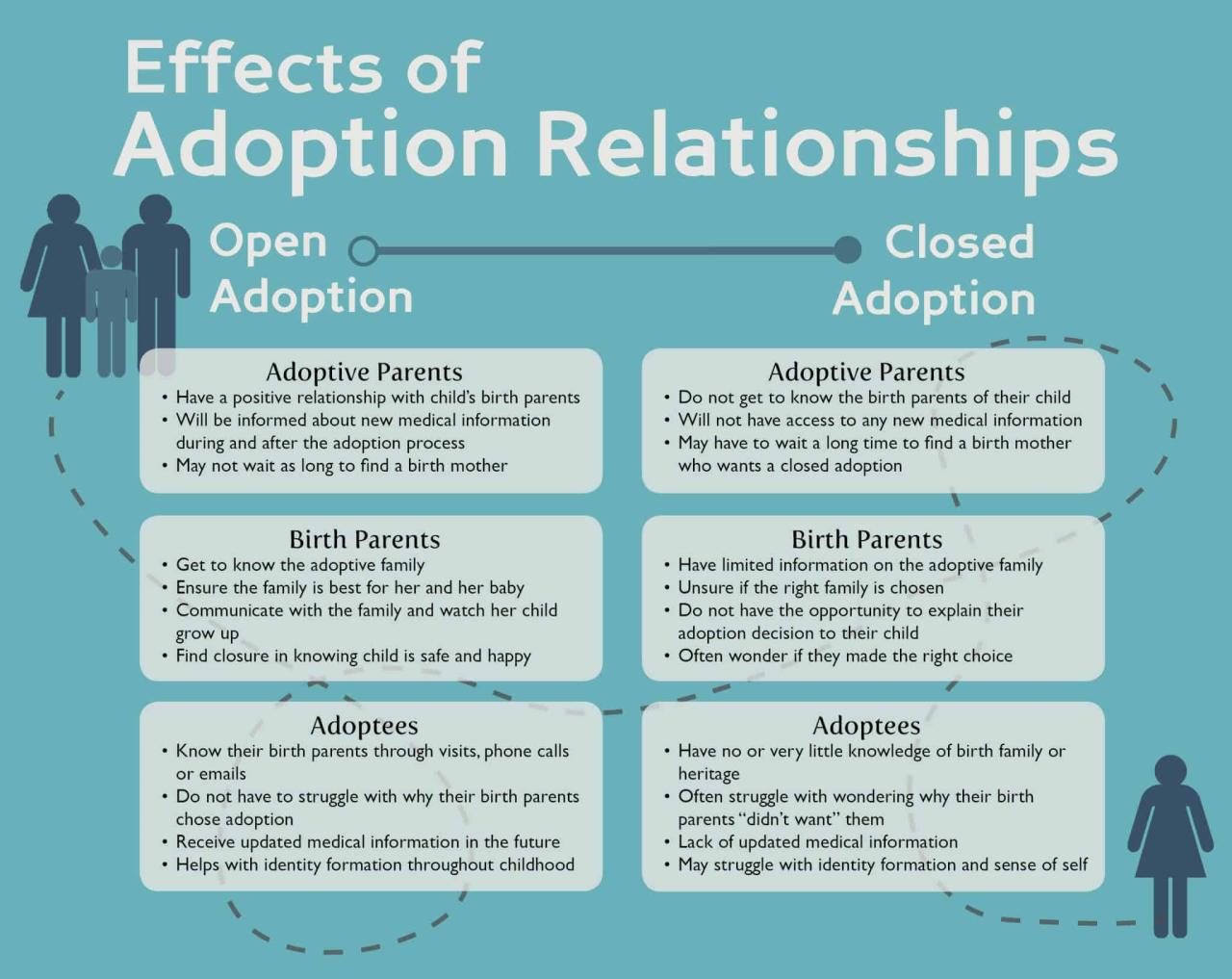
- Emotional healing: Birth parents may find closure and peace knowing their child is safe and well-cared for.
- Relationship with the child: Allows birth parents to maintain a relationship with their child and see them grow up.
- Transparency: Birth parents have the opportunity to know about their child's well-being and development.
Impact of Open Adoption on the Child's Well-being
- Identity formation: Children in open adoptions may have a better understanding of their background and identity.
- Emotional well-being: Having access to information about birth parents can help children feel more secure and confident.
- Reduced stigma: Open adoption can help reduce the stigma associated with adoption by promoting openness and honesty.
Comparison with Closed Adoption
In contrast to open adoption, closed adoption involves no contact between birth parents and adoptive parents after the adoption is finalized. Closed adoption may provide privacy and closure for some birth parents, but it can also limit information and connections for the child. Open adoption, on the other hand, allows for ongoing communication and relationships, which can benefit all parties involved in the adoption process.Closed Adoption
Closed adoption is a type of adoption where there is no contact between the birth parents and the adoptive family. In this arrangement, identifying information is sealed and kept confidential, limiting or eliminating any form of communication between the parties involved.
Reasons for Opting for Closed Adoption
There are various reasons why individuals may choose closed adoption over open adoption. Some common reasons include:
- Desire for privacy and anonymity
- Fear of interference from birth parents
- Concerns about potential disruptions in the adoptive family
Challenges Faced by Adoptees in Closed Adoptions
Adoptees in closed adoptions often encounter several challenges due to the lack of information about their biological background. Some of these challenges include:
- Identity issues and a sense of belonging
- Difficulty obtaining medical history and genetic information
- Emotional struggles related to unanswered questions about their origins
Psychological Effects of Closed Adoption
Closed adoption can have lasting psychological effects on all parties involved, including the birth parents, adoptive parents, and the adoptee. Some of these effects may include:
- Feelings of loss and grief for birth parents
- Challenges in forming a complete sense of identity for the adoptee
- Struggles with trust and attachment in adoptive families
Pros of Open Adoption
Open adoption offers several benefits for adoptive parents, including the opportunity to establish a relationship with the birth parents, access to important medical history and information, and the ability to provide the child with a sense of identity and connection to their roots.Establishing a Relationship with Birth Parents
One of the main advantages of open adoption is the chance for adoptive parents to build a relationship with the birth parents. This can provide a sense of trust and understanding between all parties involved, creating a supportive environment for the child.Access to Medical History and Information
In open adoption, adoptive parents have the opportunity to obtain crucial medical history and information from the birth parents. This information can be essential for the child's well-being, allowing for better healthcare decisions and understanding of potential genetic predispositions.Fostering a Sense of Identity for the Child
Open adoption can play a crucial role in fostering a sense of identity for the child by maintaining a connection to their birth family. This connection can help the child understand their background, heritage, and cultural roots, contributing to a strong sense of self-awareness and identity formation.Cons of Open Adoption
When considering open adoption as an option, it is important to acknowledge that there are potential challenges and drawbacks that may arise. These factors can impact all parties involved in the adoption process.Emotional Complexities
Open adoption relationships can bring about emotional complexities for all parties involved. Birth parents may experience feelings of grief, loss, and ongoing emotional attachment to the child. Adoptive parents may struggle with fears of competition or uncertainty about their role in the child's life. The child themselves may face confusion or conflicting loyalties as they navigate relationships with multiple sets of parents.Overall, the emotional complexities that can arise in open adoption relationships require careful consideration and ongoing communication to ensure the well-being of everyone involved.Legalities of Adoption
Adoption is a legal process that involves various requirements and responsibilities for all parties involved. Understanding the legal aspects of adoption is crucial to ensure the process is carried out properly and ethically.Legal Requirements for Open and Closed Adoptions
In both open and closed adoptions, there are specific legal requirements that must be met to finalize the adoption process. These requirements may vary depending on the state or country where the adoption takes place. Generally, the birth parents must voluntarily terminate their parental rights, and the adoptive parents must meet certain eligibility criteria set forth by the adoption agency or court.Role of Adoption Agencies and Lawyers
Adoption agencies and lawyers play a crucial role in facilitating adoptions by guiding the birth parents and adoptive parents through the legal process. Adoption agencies help match birth parents with prospective adoptive parents and ensure that all legal requirements are met. Lawyers represent the parties involved in the adoption, prepare legal documents, and advocate for their clients' rights throughout the process.Rights and Responsibilities of Birth Parents, Adoptive Parents, and Adoptees
Birth parents have the right to make decisions about the adoption of their child, including choosing the adoptive parents and the level of openness in the adoption. Adoptive parents have the responsibility to provide a safe and loving home for the child and fulfill all legal obligations related to the adoption. Adoptees have the right to know about their adoption and access information about their birth family, depending on the type of adoption.Last Point
In conclusion, the discussion around Open Adoption vs Closed Adoption Pros Cons and Legalities highlights the importance of understanding the diverse perspectives and implications associated with different adoption practices. By delving into the pros, cons, and legal considerations, we gain a deeper insight into the complex world of adoption.
FAQ Compilation
How does open adoption differ from closed adoption?
In open adoption, there is ongoing contact between birth parents, adoptive parents, and the child, while closed adoption involves no contact and sealed records.
What are the challenges faced by adoptees in closed adoptions?
Adoptees in closed adoptions may struggle with identity issues, lack of medical history knowledge, and a sense of loss from not knowing their biological roots.
What legal requirements are involved in open and closed adoptions?
Open adoptions often require agreements outlining visitation rights, while closed adoptions typically involve sealed records and limited information exchange.
How can open adoption benefit adoptive parents?
Open adoption can provide adoptive parents with more information about the child's background, medical history, and a chance to build a relationship with the birth parents.