
Starting with Income Limits and Requirements for Child Care Assistance in 2026, the narrative unfolds in a compelling and distinctive manner, drawing readers into a story that promises to be both engaging and uniquely memorable.
This topic delves into the crucial aspects of child care assistance programs, income limits, eligibility requirements, and potential changes by 2026, providing valuable insights for families navigating these support systems.
Understanding Child Care Assistance Programs
Child care assistance programs are designed to provide financial support to families who need help covering the costs of child care. These programs aim to make quality child care more affordable and accessible to families, especially those with low to moderate incomes.Types of Child Care Assistance Available
- Subsidies: Child care subsidies are financial aid provided by the government to help eligible families pay for child care services.
- Tax Credits: Some families may qualify for tax credits to offset the cost of child care expenses when filing their taxes.
- Vouchers: Child care vouchers are another form of assistance that can be used to pay for child care services at approved providers.
Income Limits for Child Care Assistance
In order to qualify for child care assistance, there are specific income limits set by the program. These limits are crucial in determining eligibility for families in need of financial support to afford child care services.When it comes to calculating income limits for child care assistance, various factors are taken into consideration. This includes the total income of the household, number of dependents, and any additional financial resources that contribute to the overall household income.How Income Limits are Calculated
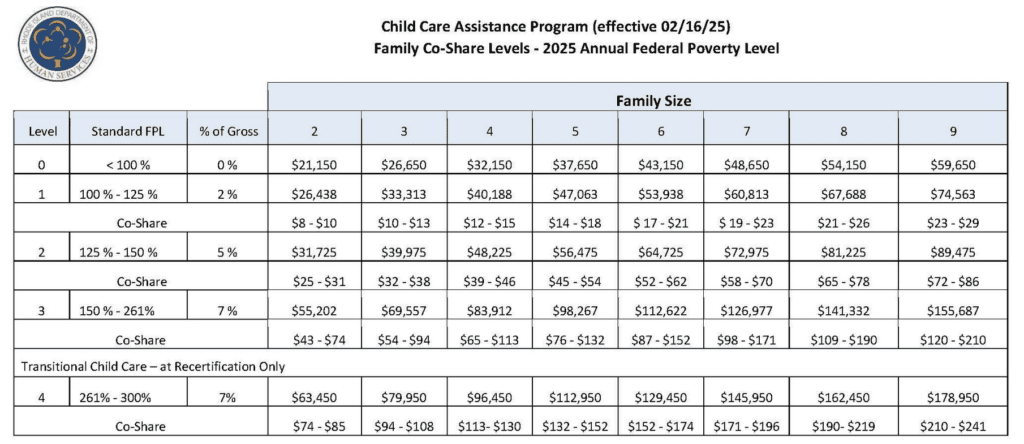
- Income limits are typically based on the federal poverty level (FPL) guidelines.
- Household income is calculated by adding up the earnings of all adult members in the household.
- Other sources of income such as child support, alimony, and public assistance are also factored into the total household income.
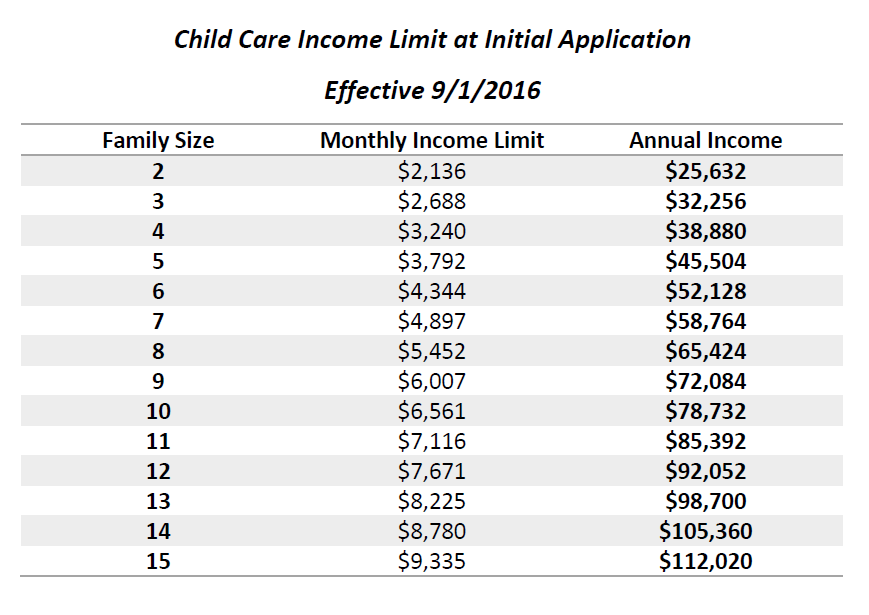
- Income limits may vary depending on the number of dependents in the household.
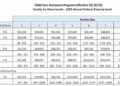
For example, a family of four with a household income below 200% of the FPL may qualify for child care assistance.
Impact of Changes in Income on Eligibility
- If a family experiences an increase in income that surpasses the income limits set by the program, they may no longer be eligible for child care assistance.
- Conversely, a decrease in household income due to job loss or other circumstances may make a family eligible for child care assistance if their income falls below the set limits.
- It is important for families to report any changes in income promptly to ensure their eligibility status is up to date.
Requirements for Child Care Assistance
 To apply for child care assistance, families need to provide specific documentation and meet certain criteria to qualify for the program.
Common Documentation Needed
- Proof of income (pay stubs, tax returns)
- Proof of identity for the child and parent/guardian
- Proof of residency
- Child's birth certificate
Criteria Families Must Meet to Qualify
- Families must fall within the income limits set by the program
- Parents or guardians must be working, attending school, or participating in a job training program
- Children receiving assistance must be under a certain age
Work or Education Requirements
- Parents or guardians must be working a minimum number of hours per week
- Parents or guardians must be enrolled in an approved educational program
- Parents or guardians must provide documentation of their work or education status regularly
Changes in Child Care Assistance Programs by 2026

Forecasted Changes in Income Limits
- With the rising cost of living and inflation rates, it is anticipated that income limits for child care assistance programs may be adjusted to reflect the current economic conditions.
- Government agencies and policymakers are likely to consider the median household income levels and cost of child care services in different regions to determine new income limits.
- Families with incomes slightly above the current thresholds may find themselves eligible for assistance due to these potential adjustments.
Updated Requirements Expected
- As child care standards and regulations evolve, there may be updated requirements for families applying for assistance, such as additional documentation or proof of employment status.
- Program administrators could introduce new criteria to ensure that families receiving assistance are meeting specific educational or training requirements to enhance their overall well-being.
- Increased emphasis on parent engagement in child care programs may lead to new participation requirements for families seeking assistance.
Impact of Changes on Families
- The forecasted changes in income limits and requirements could potentially benefit a larger number of families by expanding access to child care assistance programs.
- Families previously deemed ineligible due to income constraints may now qualify for support, alleviating financial burdens and promoting the well-being of children in need of quality care.
- However, these adjustments may also pose challenges for program administrators in managing increased demand and ensuring equitable distribution of resources among eligible families.
Conclusion
In conclusion, understanding the income limits and requirements for child care assistance in 2026 is paramount for families seeking support. By staying informed about the eligibility criteria and potential changes, individuals can better access the assistance they need to ensure the well-being of their children.
Question Bank
What is the purpose of child care assistance programs?
Child care assistance programs aim to provide financial support to families who require help in covering the costs of child care services, enabling parents to work or attend school while ensuring their children receive quality care.
How are income limits for child care assistance calculated?
Income limits for child care assistance are typically determined based on the federal poverty level and may vary depending on family size and composition. Various sources of income, such as wages, child support, and public assistance, are considered in these calculations.
Are there work or education requirements for receiving child care assistance?
Some child care assistance programs may have work or education requirements, necessitating that parents or guardians are employed, actively seeking work, or enrolled in educational programs to qualify for assistance. These requirements aim to promote self-sufficiency among program recipients.
What potential changes in income limits can be expected by 2026?
By 2026, income limits for child care assistance programs may undergo adjustments to align with economic trends and the evolving needs of families. It is crucial to stay informed about these changes to understand how they may impact eligibility and access to support.
What documentation is commonly needed to apply for child care assistance?
Commonly required documentation for applying for child care assistance includes proof of income, identification documents, birth certificates for children, and sometimes verification of employment or enrollment in educational programs. Ensuring all necessary paperwork is in order can streamline the application process.